Diabetes Care App (48-hour Design Challenge)
Mobile
Platform
UX Designer
Role
Tool

Design a user-friendly mobile app to help patients with Type 2 diabetes monitor their blood sugar, track medication, and maintain a healthy lifestyle. Completed within a 48-hour design challenge, this project focused on creating an intuitive experience for Anjali, a 45-year-old recently diagnosed with diabetes. The solution needed to simplify her daily health management, provide clear insights, and encourage consistent engagement despite her limited tech skills.
Design a user-friendly mobile application for managing chronic health conditions, specifically targeting patients with diabetes. The app should help users monitor their blood sugar levels, track their medication, and maintain a healthy lifestyle through diet and exercise recommendations. The goal is to create an intuitive and engaging experience that encourages regular use and helps patients manage their condition effectively. Imagine you are designing for Anjali, a 45-year-old woman who was recently diagnosed with Type 2 diabetes. Anjali is not very tech-savvy and finds it challenging to keep track of her blood sugar levels, medication schedule, and dietary restrictions. She often forgets to log her readings and struggles to understand the impact of her diet and exercise on her condition. Anjali needs a solution that simplifies her daily routine and provides clear, actionable insights into her health. The app should offer features such as: Blood Sugar Monitoring Medication Tracking Diet and Exercise Recommendations: Educational Resources, Progress Tracking,
Problem Statement
My UX Design Process

01
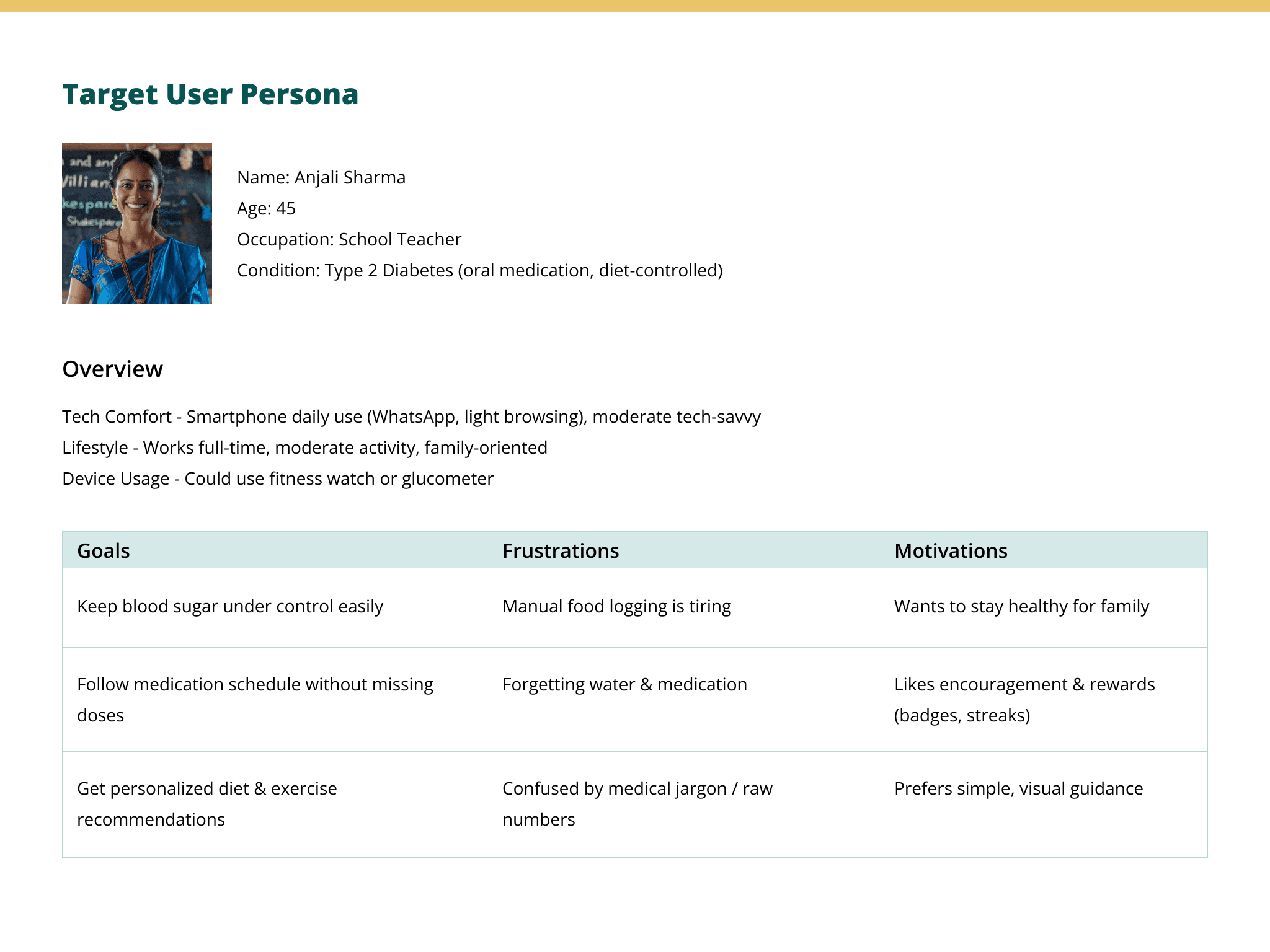
Research & Persona (Understanding the User)

02
Information Architecture

03
Design & Build
Research Insights
Diabetes Type 2 Management Needs
Regular blood sugar monitoring (frequency depends on treatment type – insulin, oral medication, or diet-controlled).
Medication adherence is critical, missed doses raise health risks.
Lifestyle management through food, exercise, water intake.
Family/doctor involvement improves accountability and outcomes.
Emotional support and motivation are often overlooked in apps.
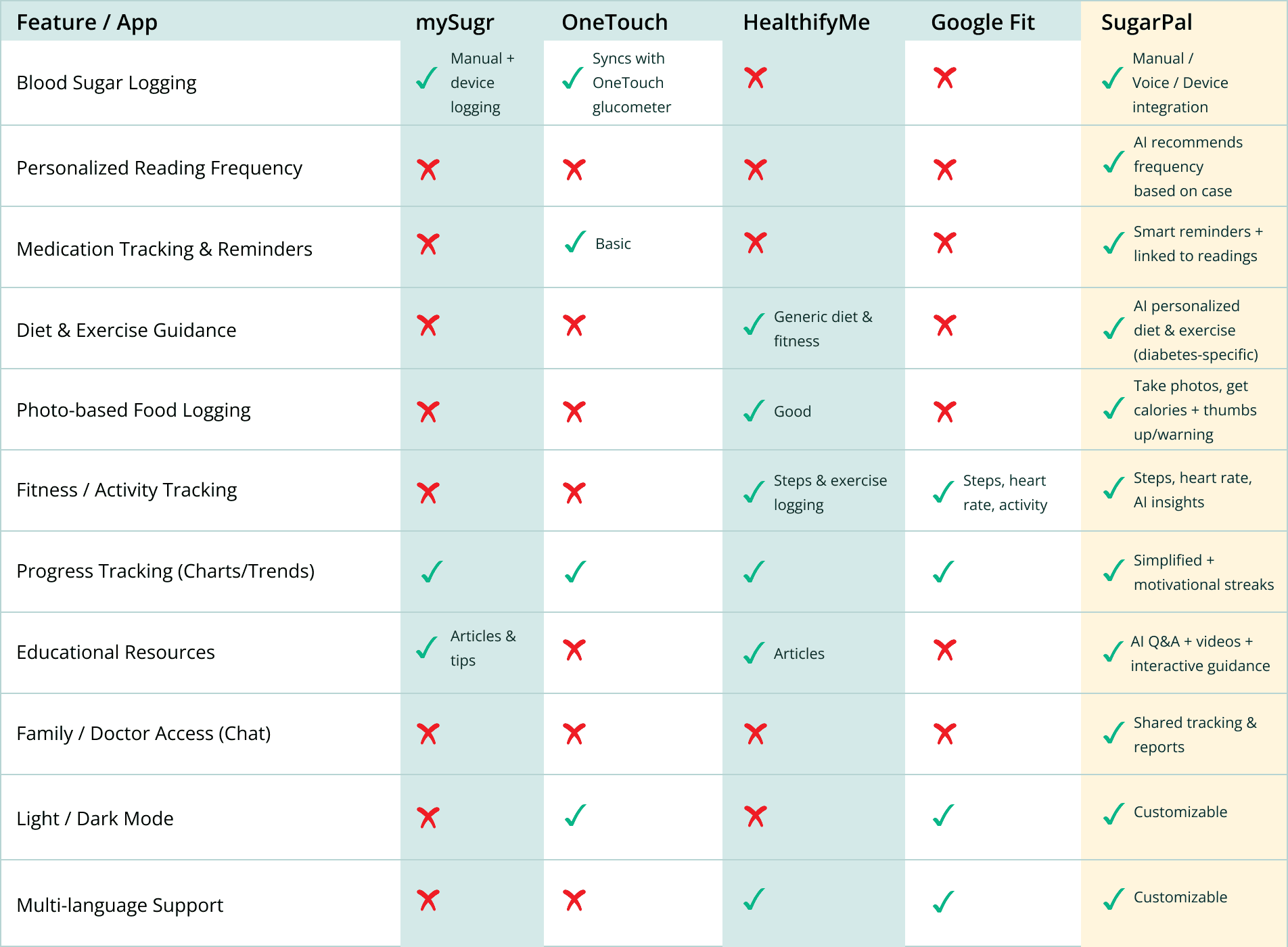
Current Gaps in Market Apps
Data logging feels manual and time-consuming.
Recommendations often too generic.
Lack of integrated ecosystem (blood sugar device + fitness watch + diet tracking).
Limited personalization and AI guidance.
Minimal focus on reminders, streaks and motivation.
Competitive Analysis – Diabetes Management Apps
Lifestyle Areas Important for Type 2 Diabetes
Diet & Nutrition
Balanced meals with controlled carbohydrates
Avoid high sugar, refined carbs and excess fats
Portion control
Hydration (water intake)
Physical Activity / Exercise
Daily movement: walking, steps tracking
Moderate aerobic exercises (e.g., 30 min/day)
Strength training / resistance exercises a few times a week
Medication Adherence
Oral medication or insulin
Timely intake is important for blood sugar management
Physical Activity / Exercise
Daily movement: walking, steps tracking
Moderate aerobic exercises (e.g., 30 min/day)
Strength training / resistance exercises a few times a week
Medication Adherence
Oral medication or insulin
Timely intake is important for blood sugar management
Blood Sugar Monitoring
Fasting, post-meal, or as prescribed by doctor
Helps understand impact of food, activity and medication
Weight Management
BMI tracking
Weight loss (if overweight) improves insulin sensitivity
Sleep & Stress Management
Poor sleep and high stress affect blood sugar
Mindfulness, meditation or relaxation exercises
Research & Persona (Understanding the User)
Based on the research insights and the curated feature set, I structured the information architecture to ensure intuitive navigation and a seamless user experience
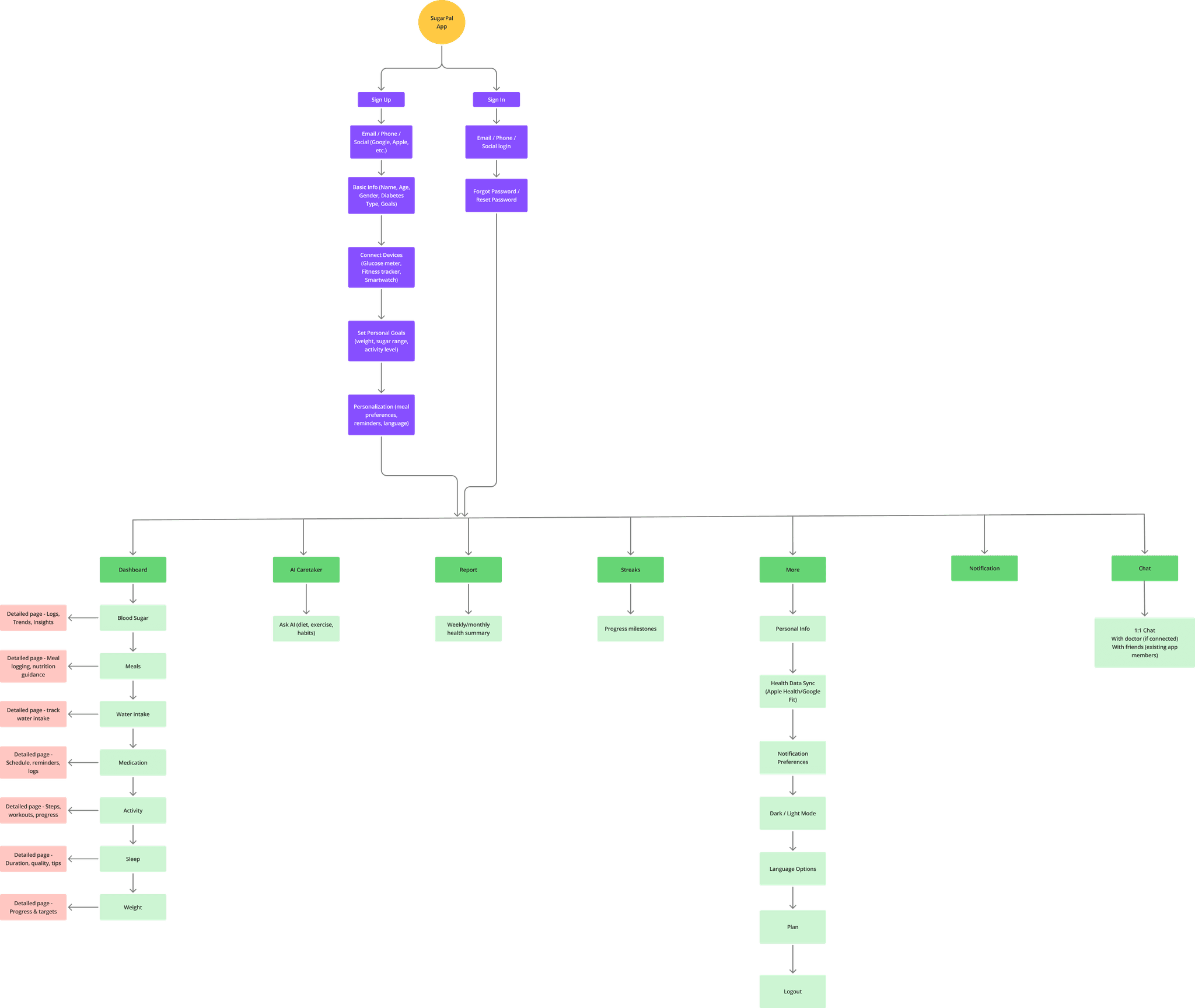
Information Architecture
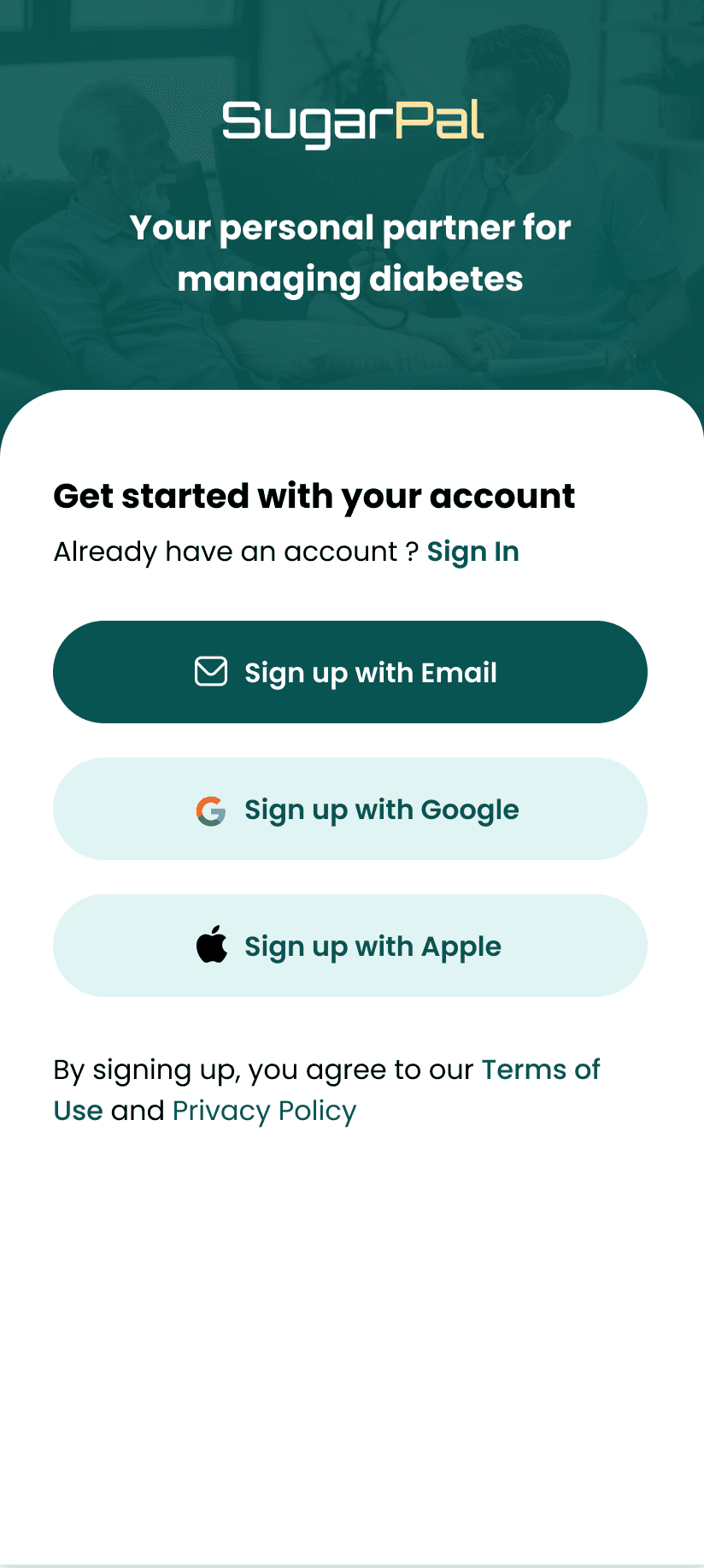
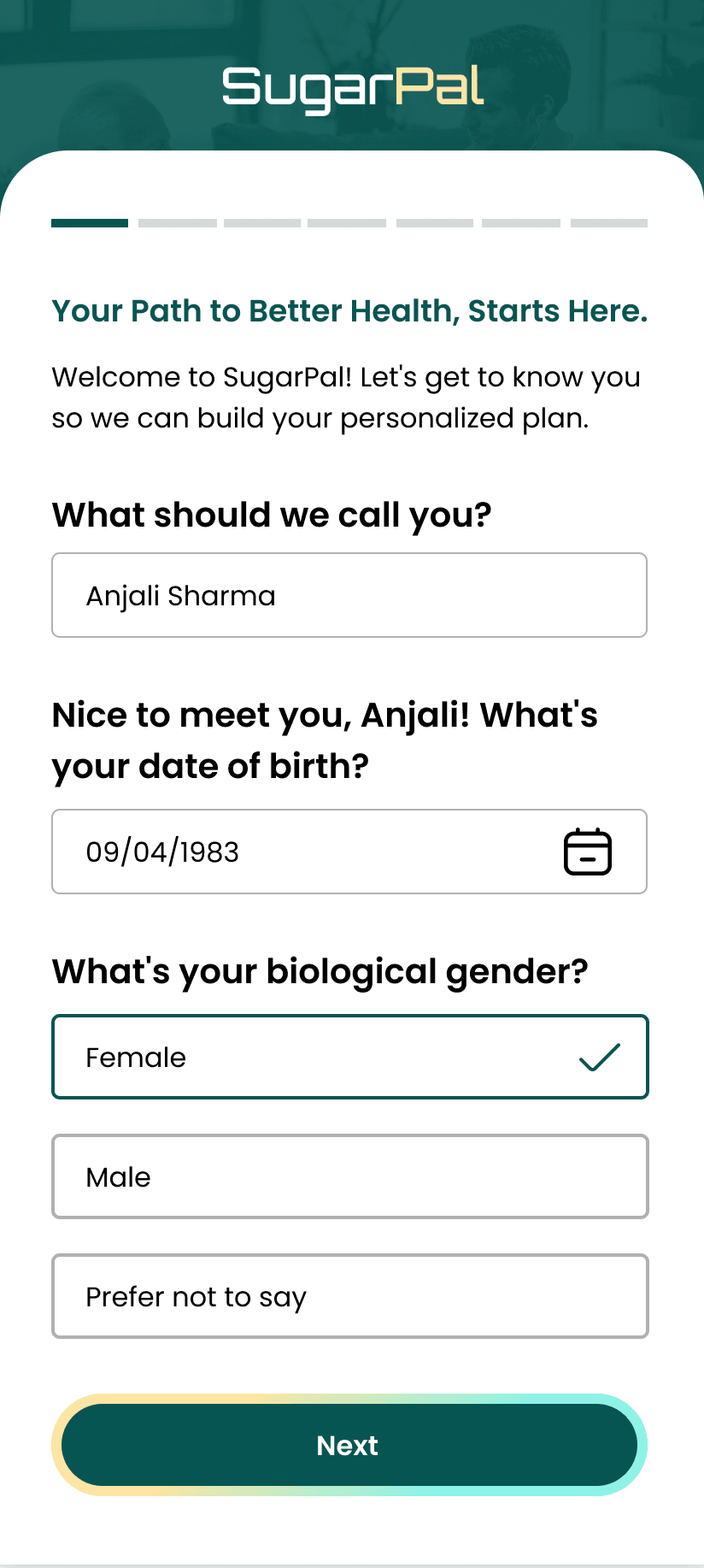
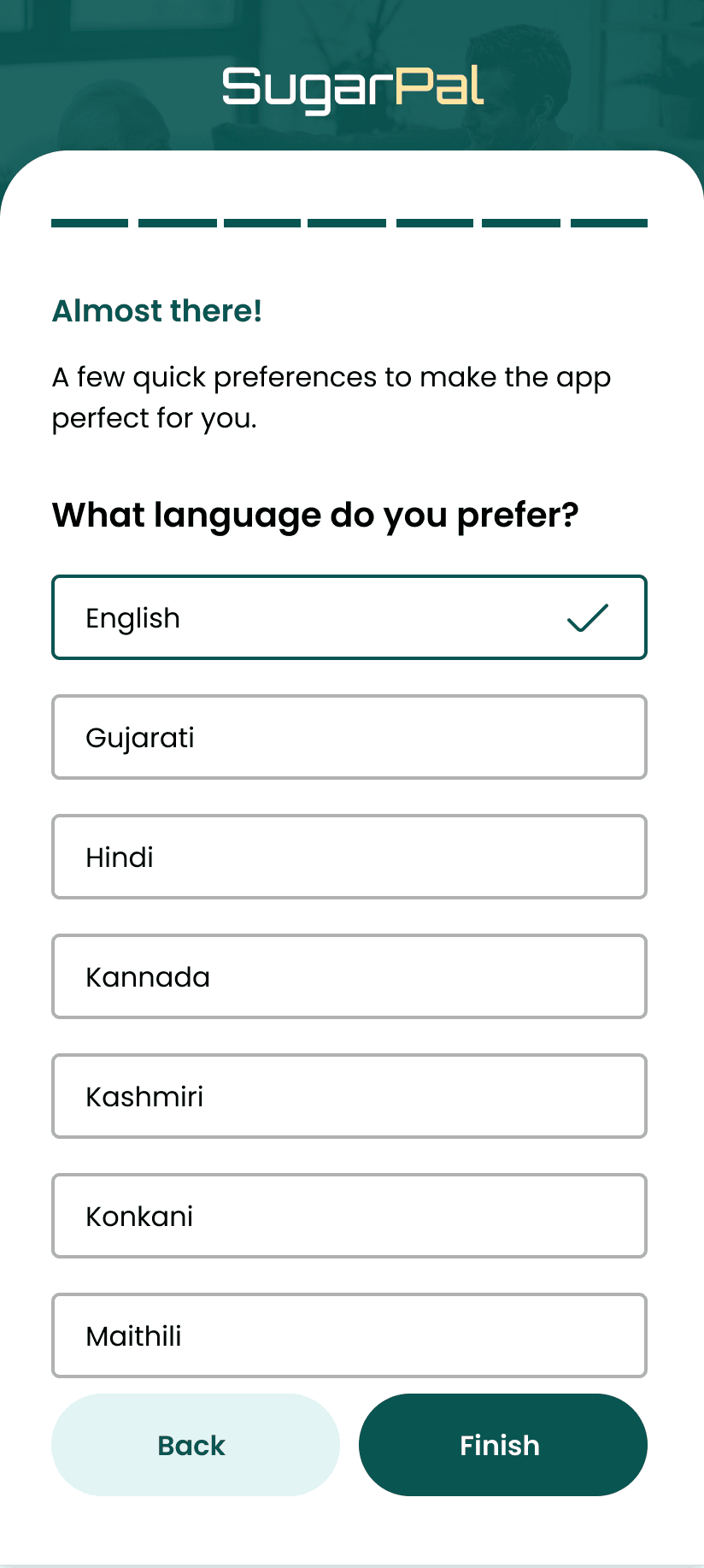
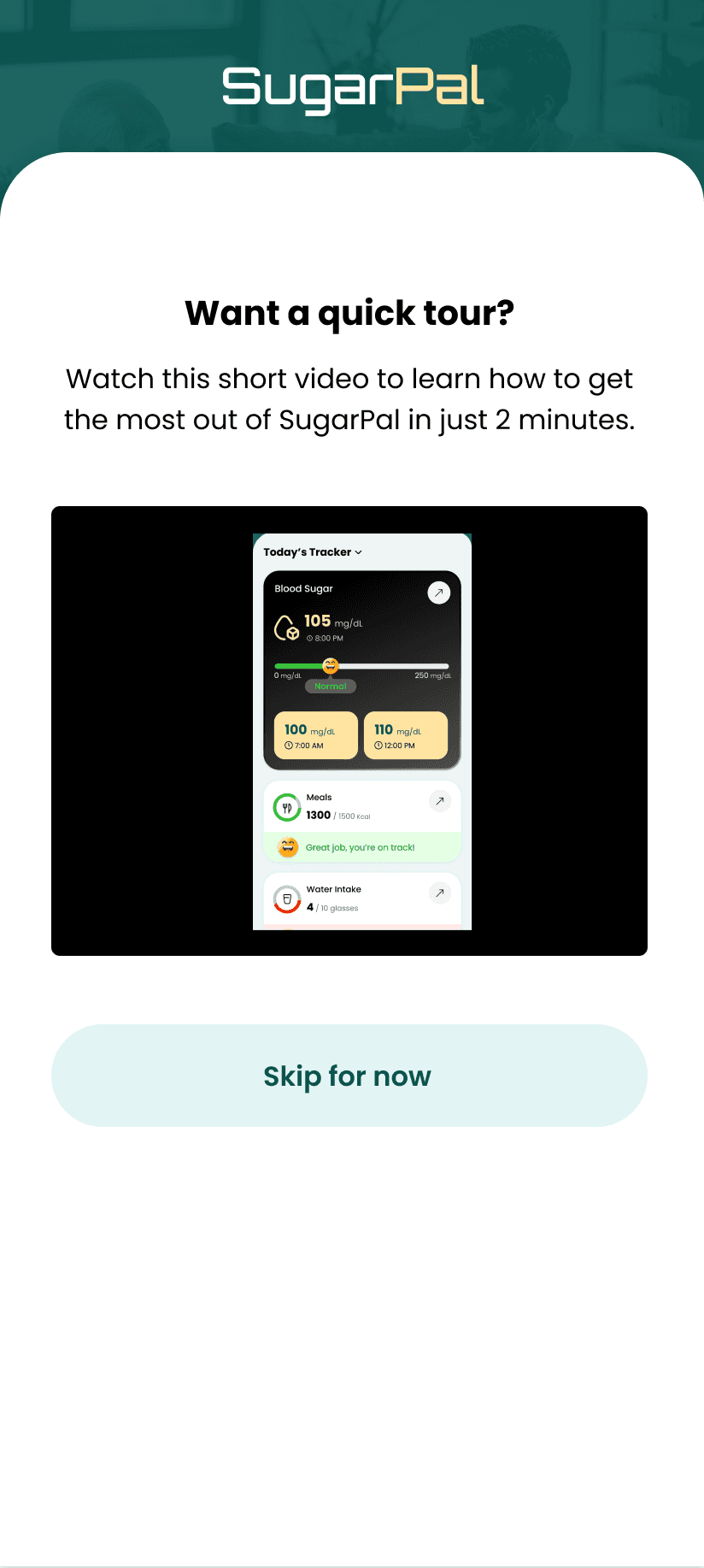
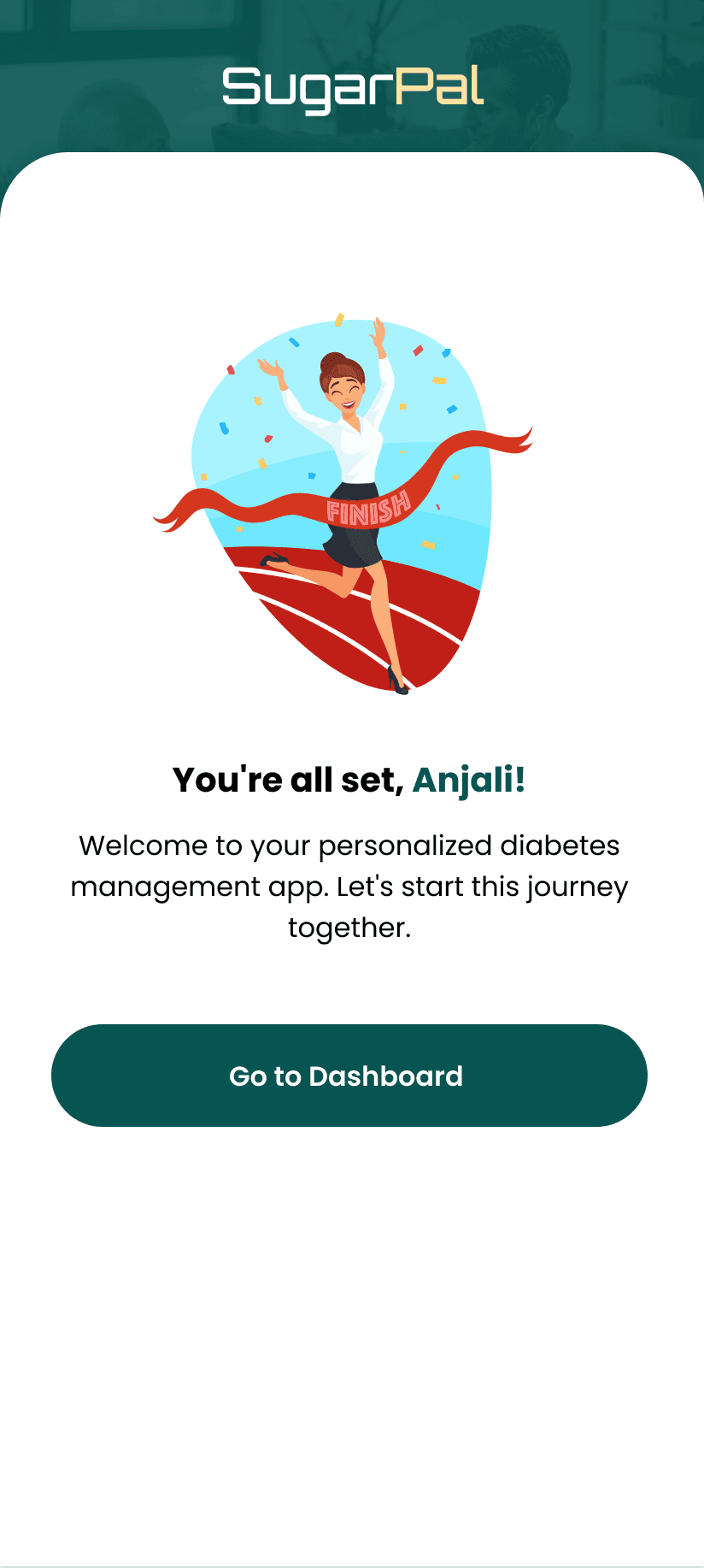
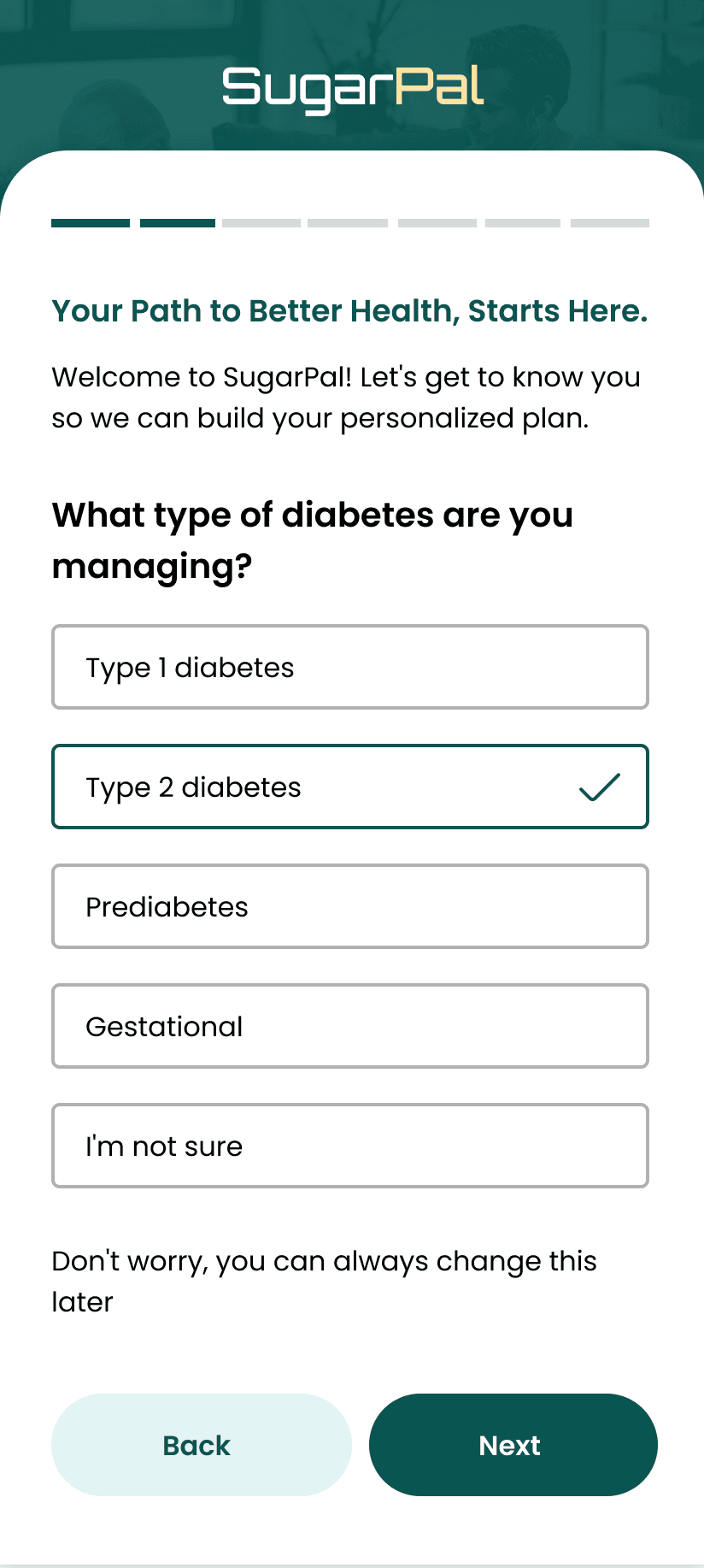
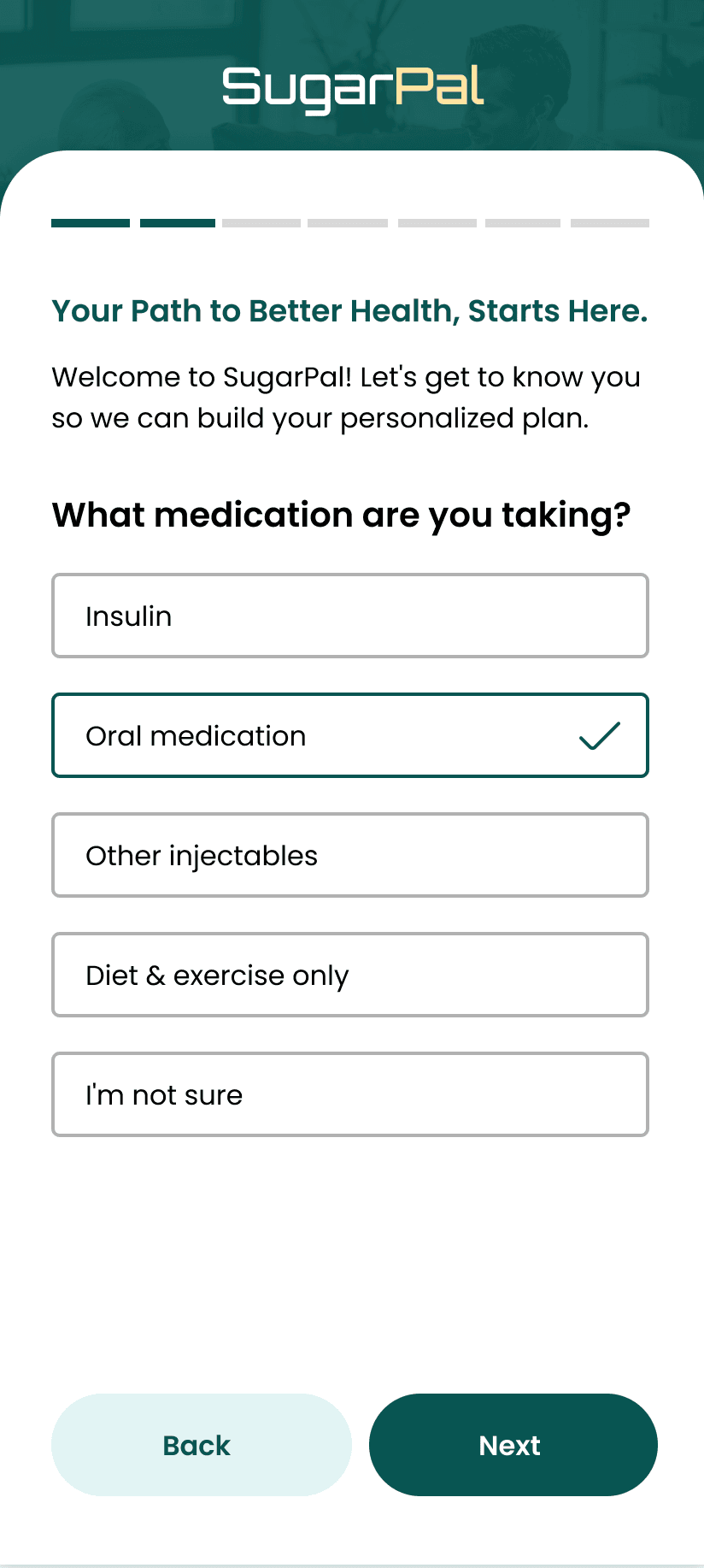
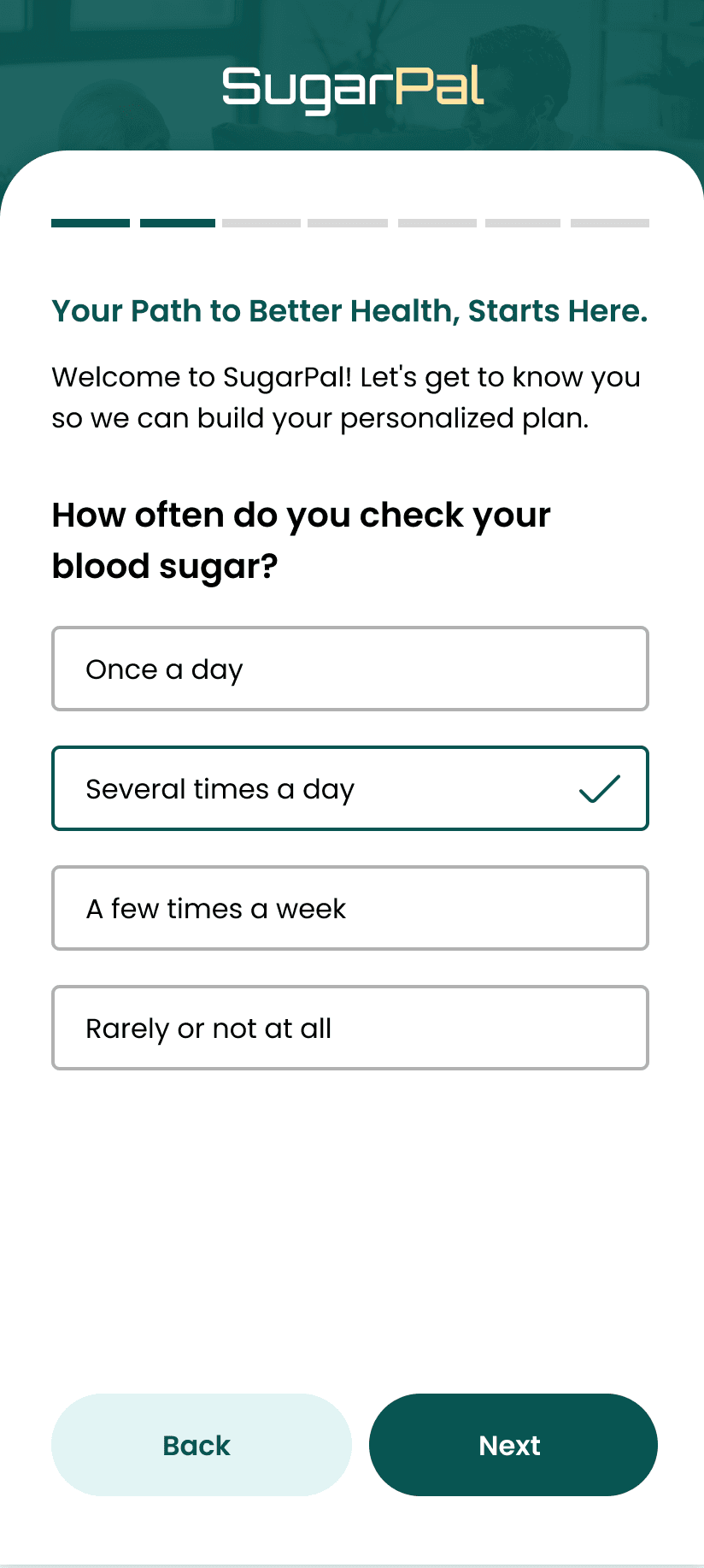
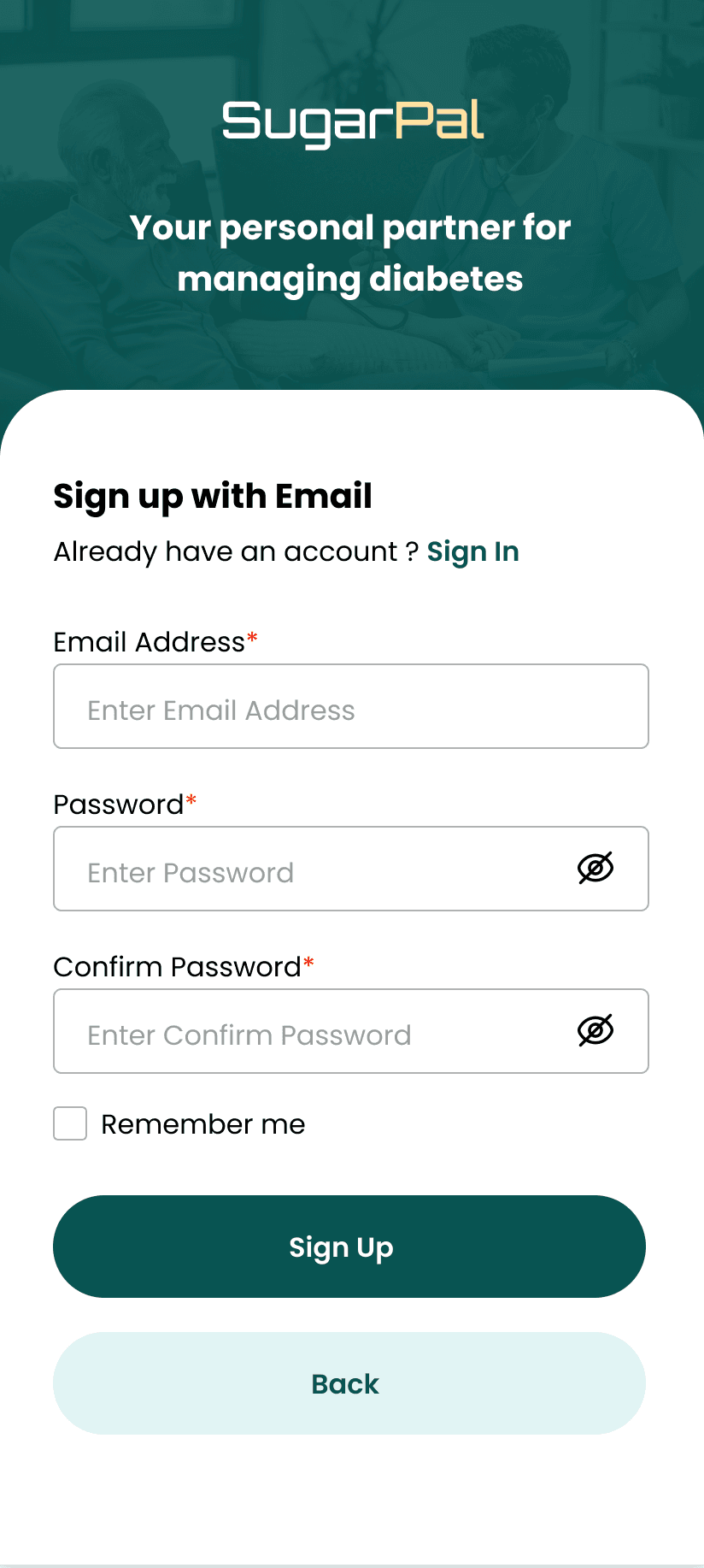
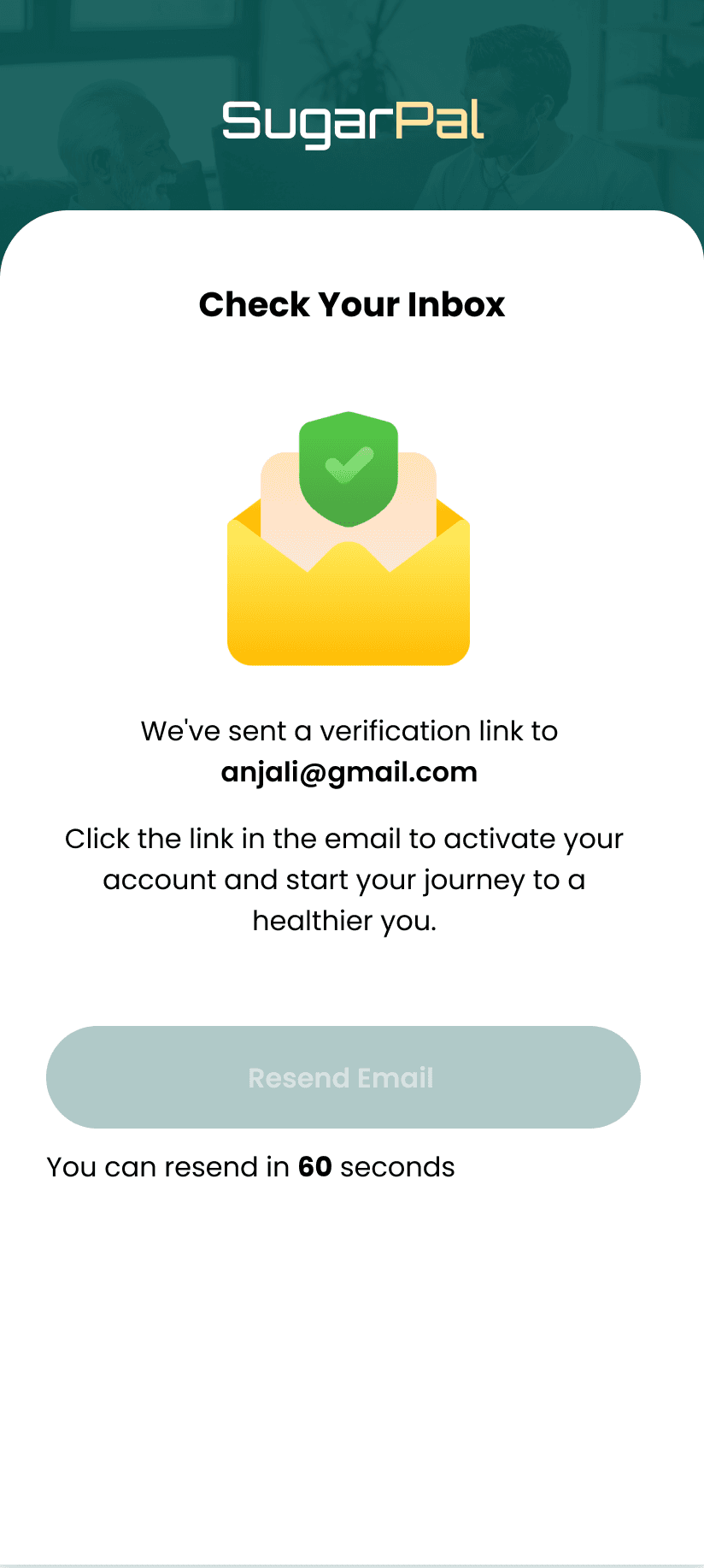
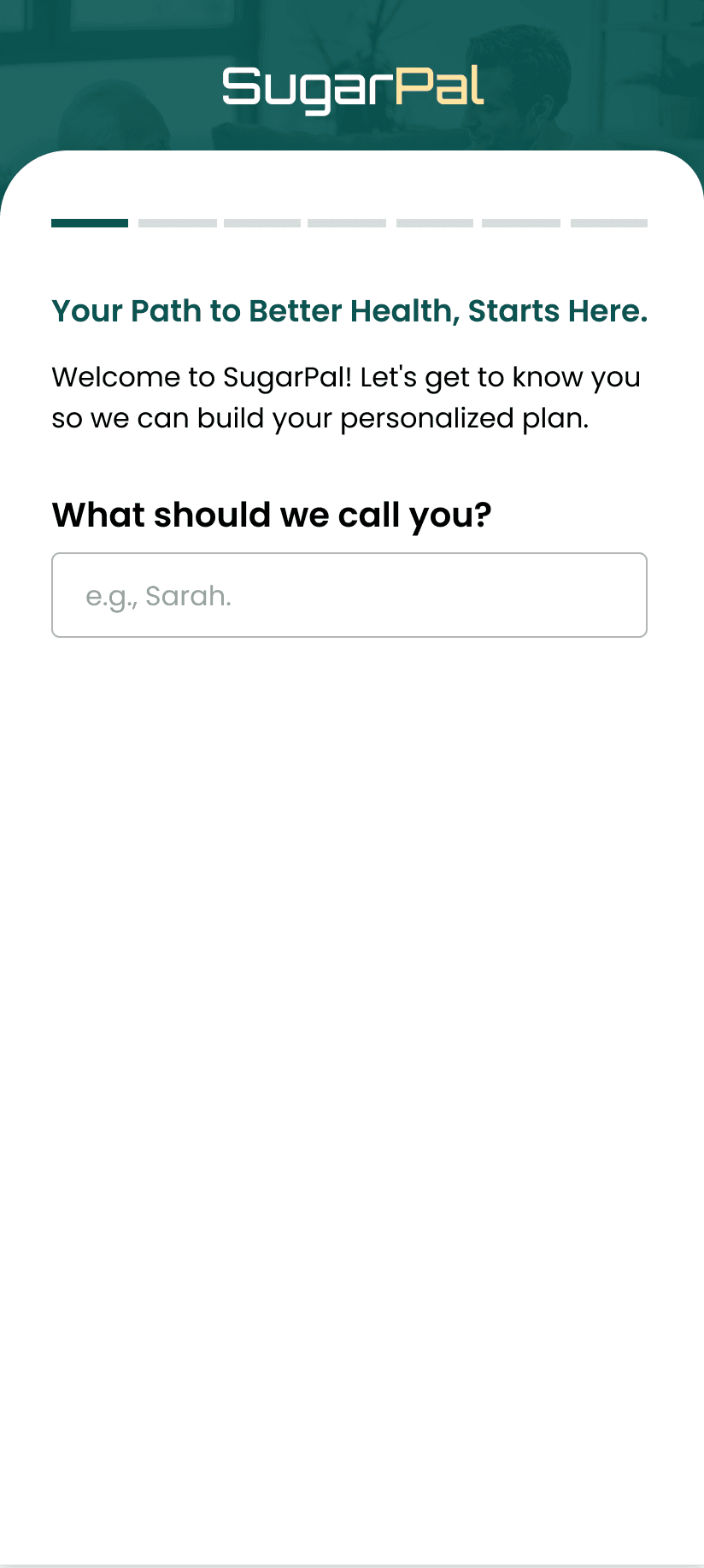
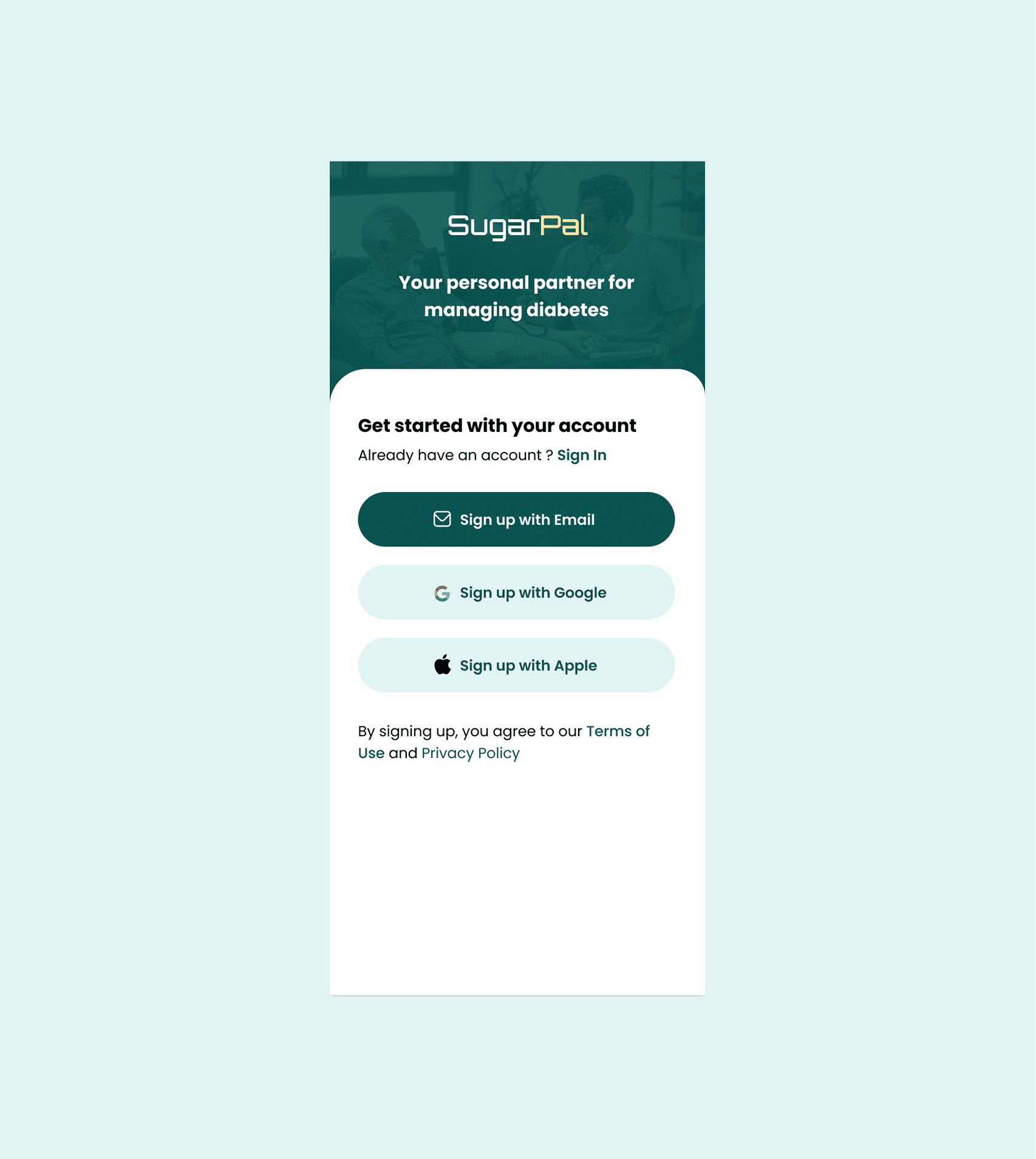
Designed and completed key screen flows within 48 hours, translating research insights and feature requirements into an intuitive user interface.
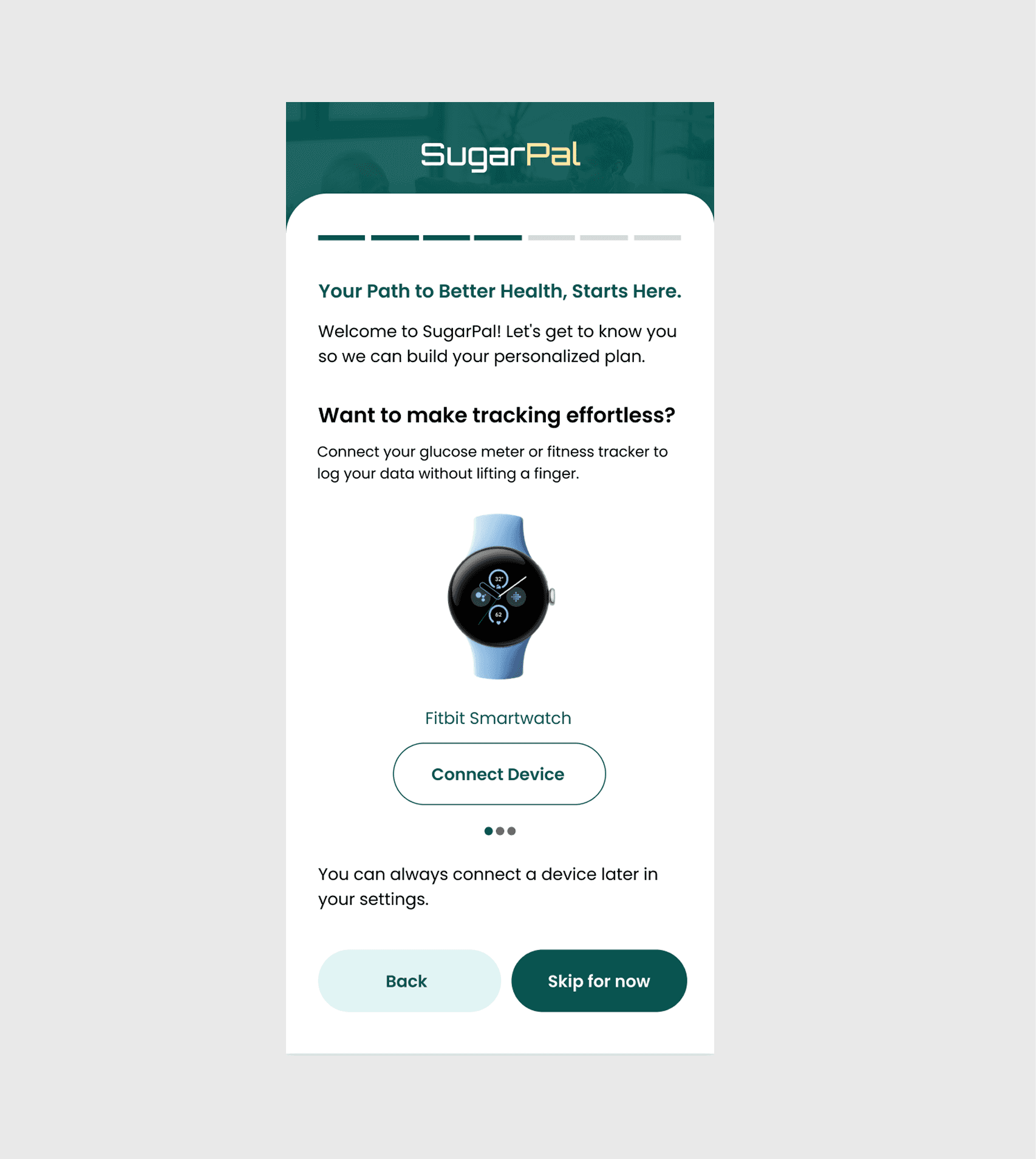
Designed and iterated quick paper sketches, then developed high-fidelity wireframes for the onboarding flow, incorporating interactive questions to personalize the app according to user needs and preferences.
Onboarding Flow
Design & Build
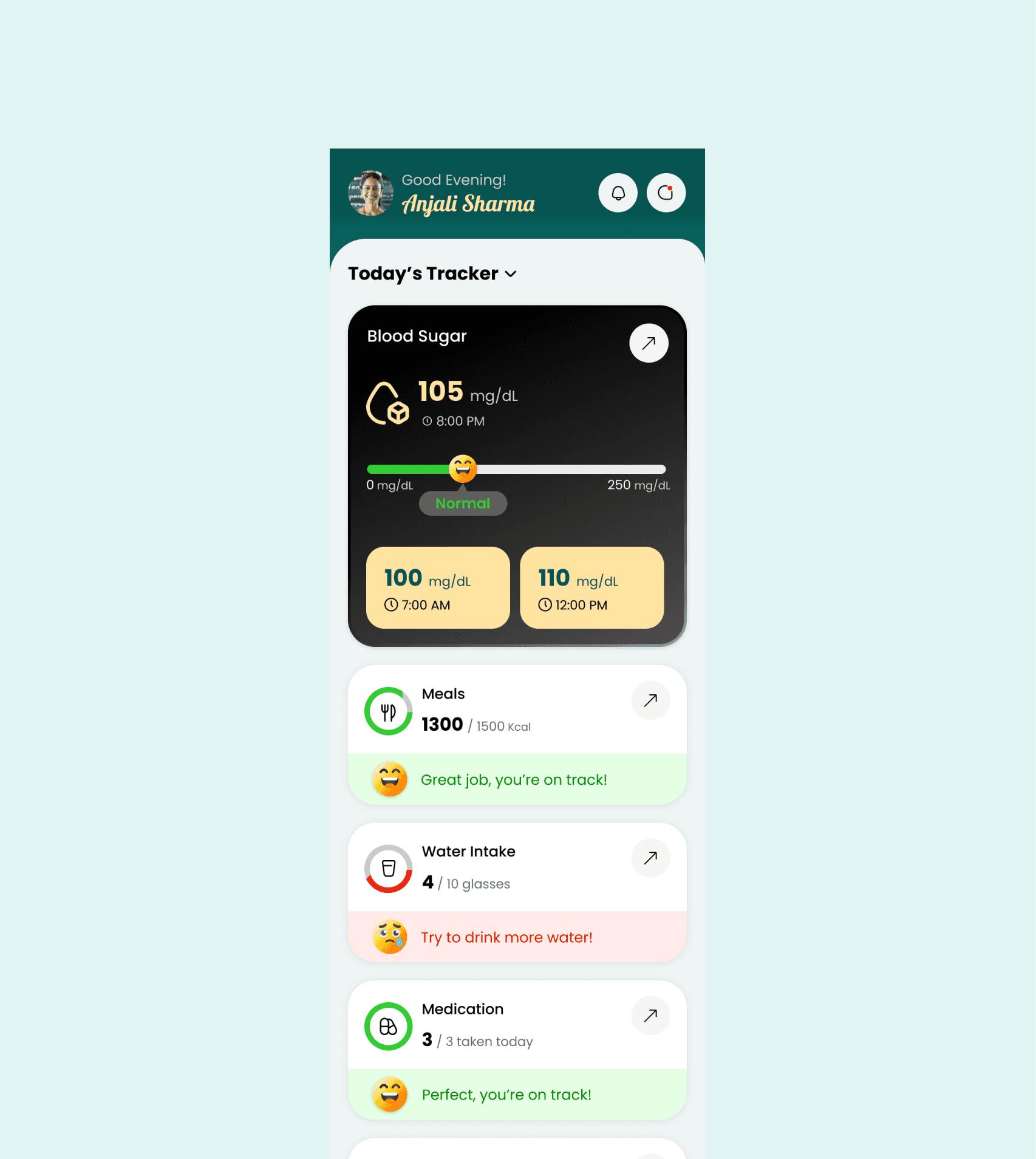
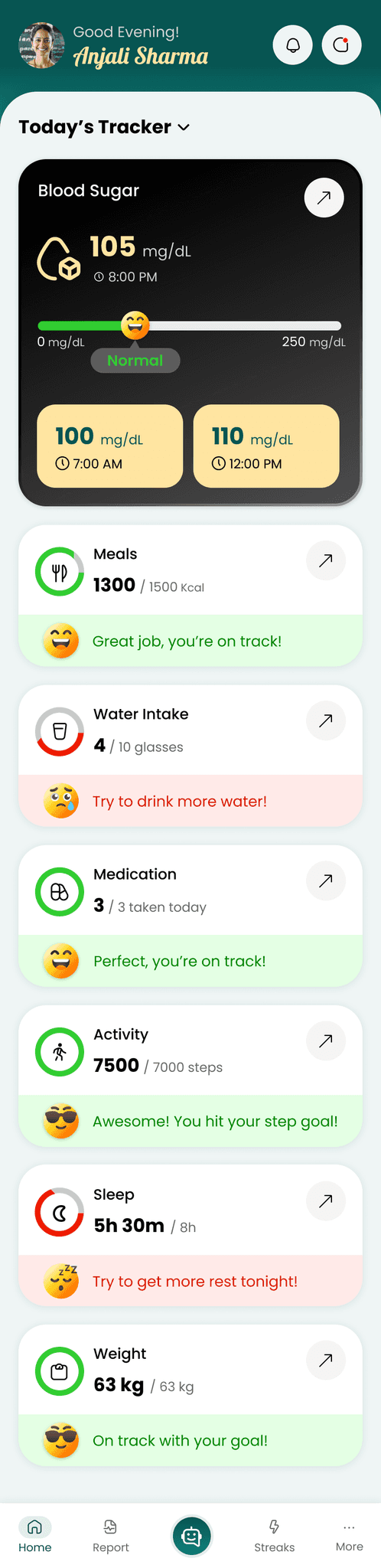
Dashboard
Designed a dashboard featuring all key trackers, ensuring even non-tech-savvy users can easily access information, while providing clear AI-driven suggestions based on user data.

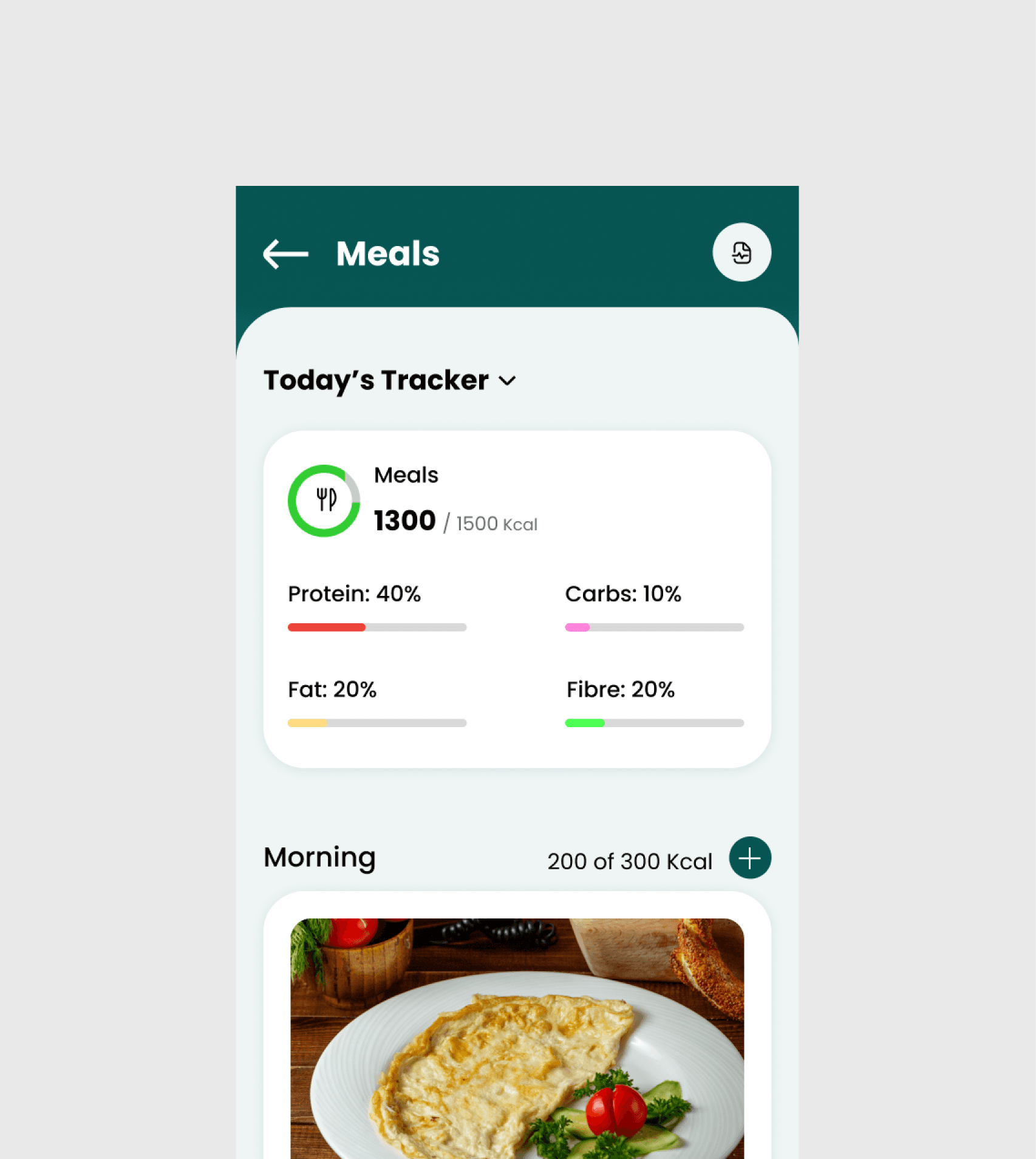
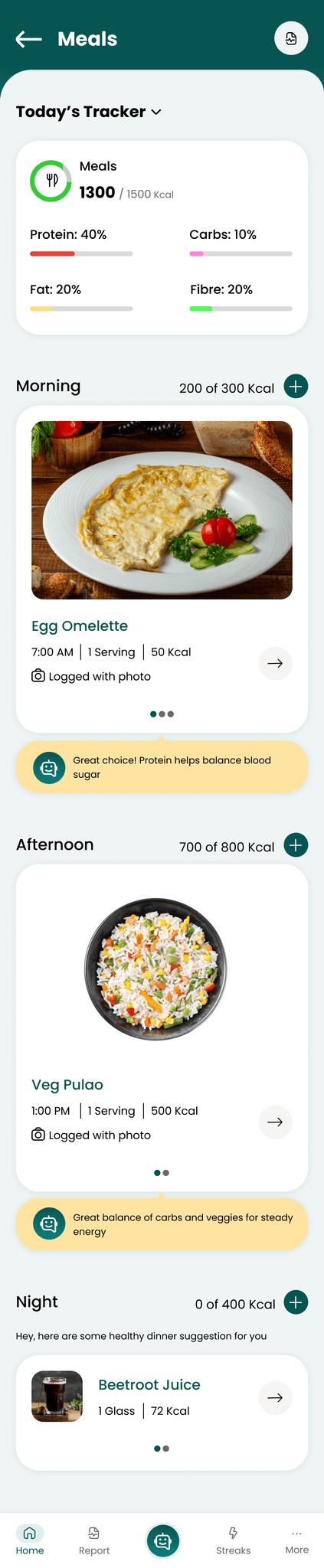
Meals
Designed a dashboard featuring all key trackers, ensuring even non-tech-savvy users can easily access information, while providing clear AI-driven suggestions based on user data.
For Users
Users can easily track their health data (blood sugar, medication, meals, water, sleep, activity, weight) which helps them stay consistent in managing diabetes.
Visual trends and alerts will make users more conscious of their daily habits and progress.
Positive/negative feedback cards (e.g: water intake not completed) encourage users to take action.
Users feel more in control of their health when everything is available in one dashboard.
For Business
Regular engagement with the dashboard increases app stickiness and long-term usage.
Collected user health data can be analyzed to improve recommendations and personalize user experience.
Positioning the app as a holistic diabetes management tool makes it more competitive.
Potential partnerships with healthcare providers, insurance companies or fitness brands.
Assumptions on Impact and Results